
Load Break Switch vs Tap Changer: What Transformer Buyers Should Specify
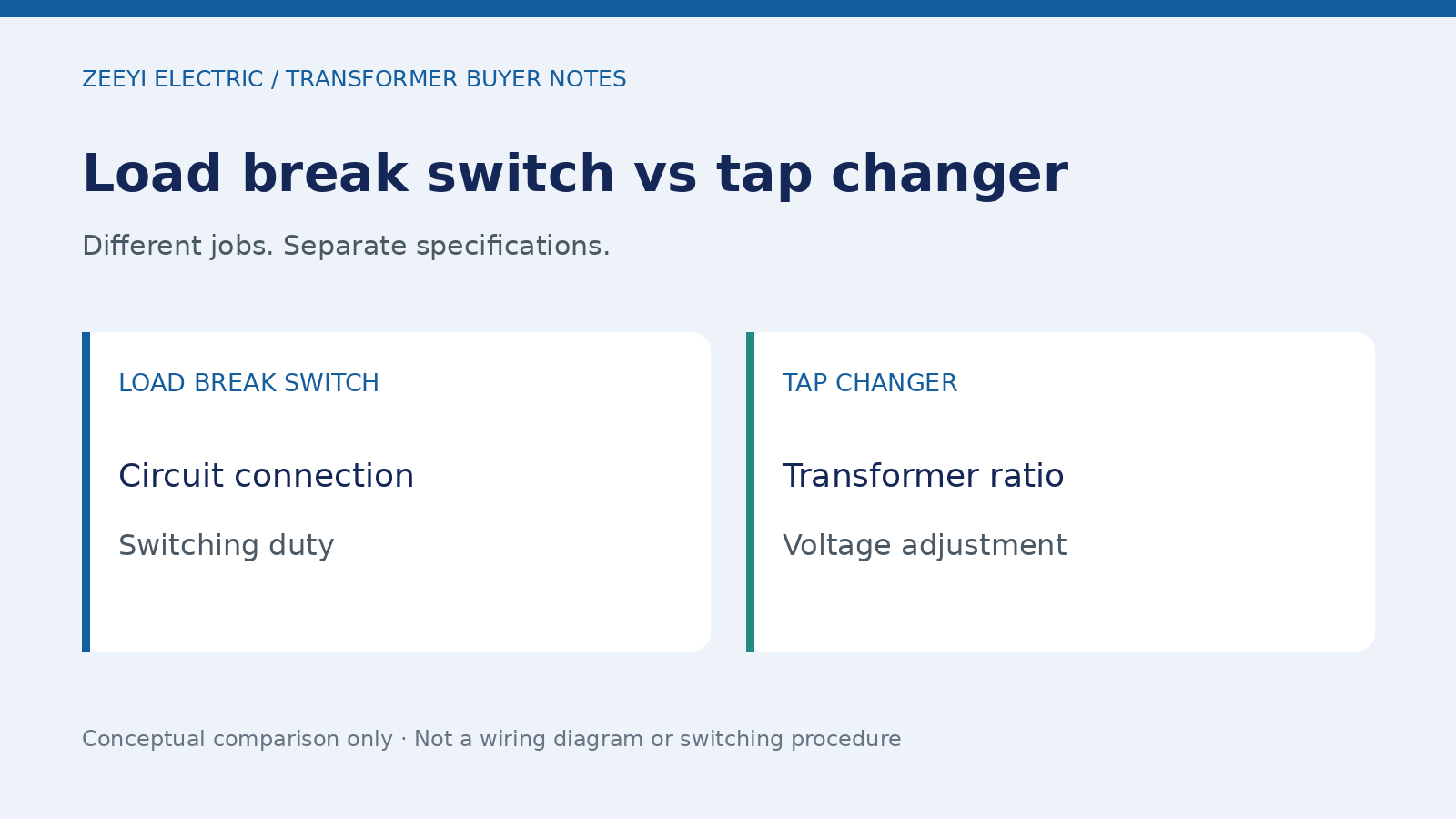
Short answer: specify a load break switch for the required circuit-switching function and a tap changer for the required ratio-adjustment function. They are not interchangeable.
This buyer’s guide is for specification discussions, not installation or operation. Medium-voltage equipment must only be handled by qualified, authorized personnel using the manufacturer’s instructions and approved safety procedures.
1. Two devices, different jobs
A transformer load break switch and a tap changer are not alternative names for the same accessory. A load break switch changes a circuit connection; a tap changer changes the transformer winding ratio. Begin a purchasing discussion with the function required, rather than the shape of the external handle or the number of positions.
For example, an OEM may need a switch arrangement for connecting or sectionalizing a transformer circuit and a separate tap-changing arrangement for the specified voltage adjustment. One item on the bill of materials should not silently stand in for the other.
2. What belongs in the load break switch specification
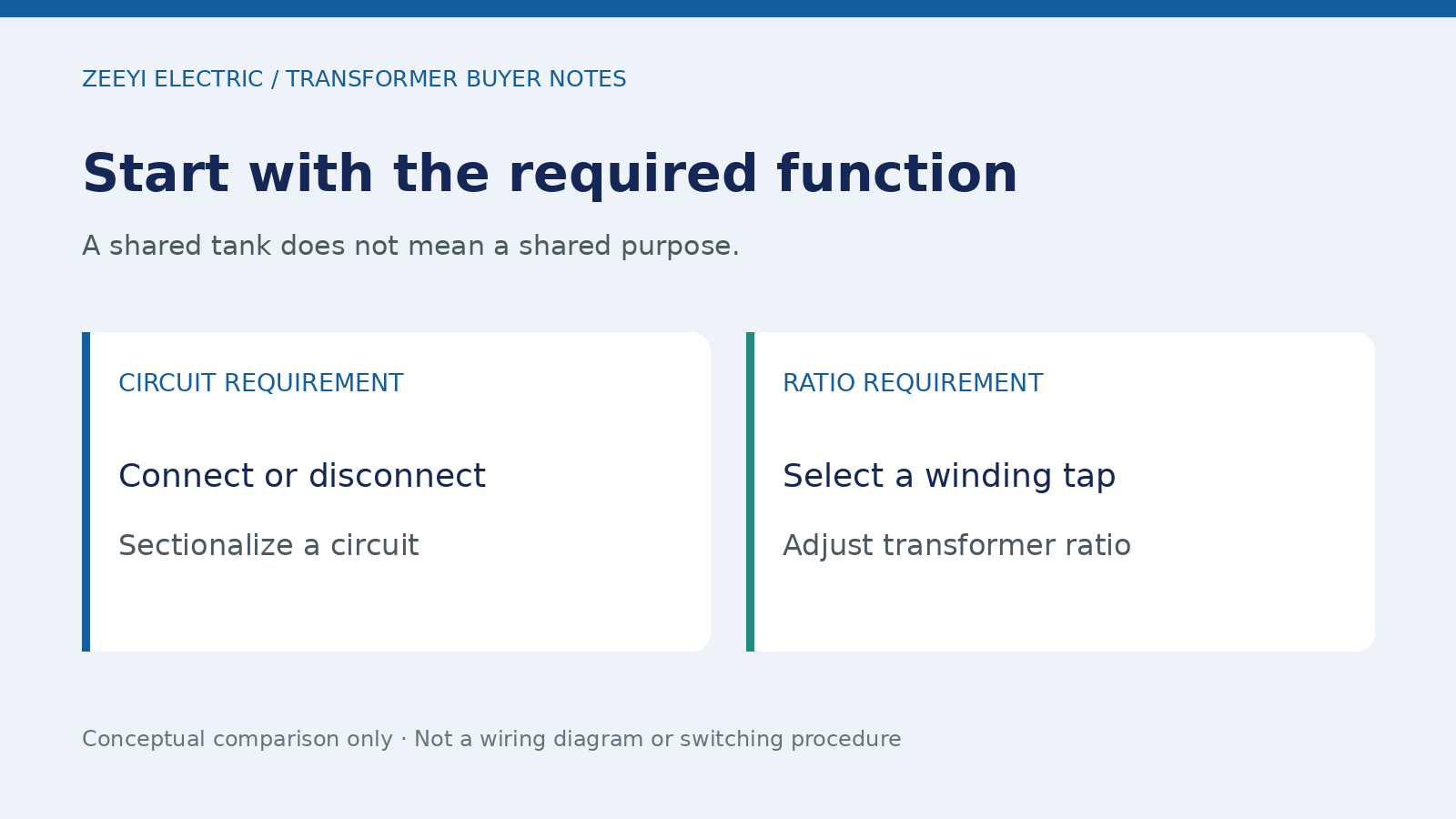
Describe the circuit arrangement and the required switching duty. Include the single-line diagram, terminal identification and position schedule. A two-position description or a four-position description alone does not explain every connection or transition.
For the ZEEYI range, start with the two-position family or four-position family, then review the exact proposed model against its catalogue and project specification. Record voltage class, current, frequency, insulation requirements and the mounting interface separately. This article does not assign a universal rating to either family.
Do not treat load-switching capability as proof of fault-interruption capability. Identify the protective equipment and required duties independently. Eaton’s transformer manual discusses internal loadbreak switches, tap changers and protective devices in separate sections—useful context for keeping their functions distinct, not a qualification document for ZEEYI products.
3. Distinguish de-energized and on-load tap changers
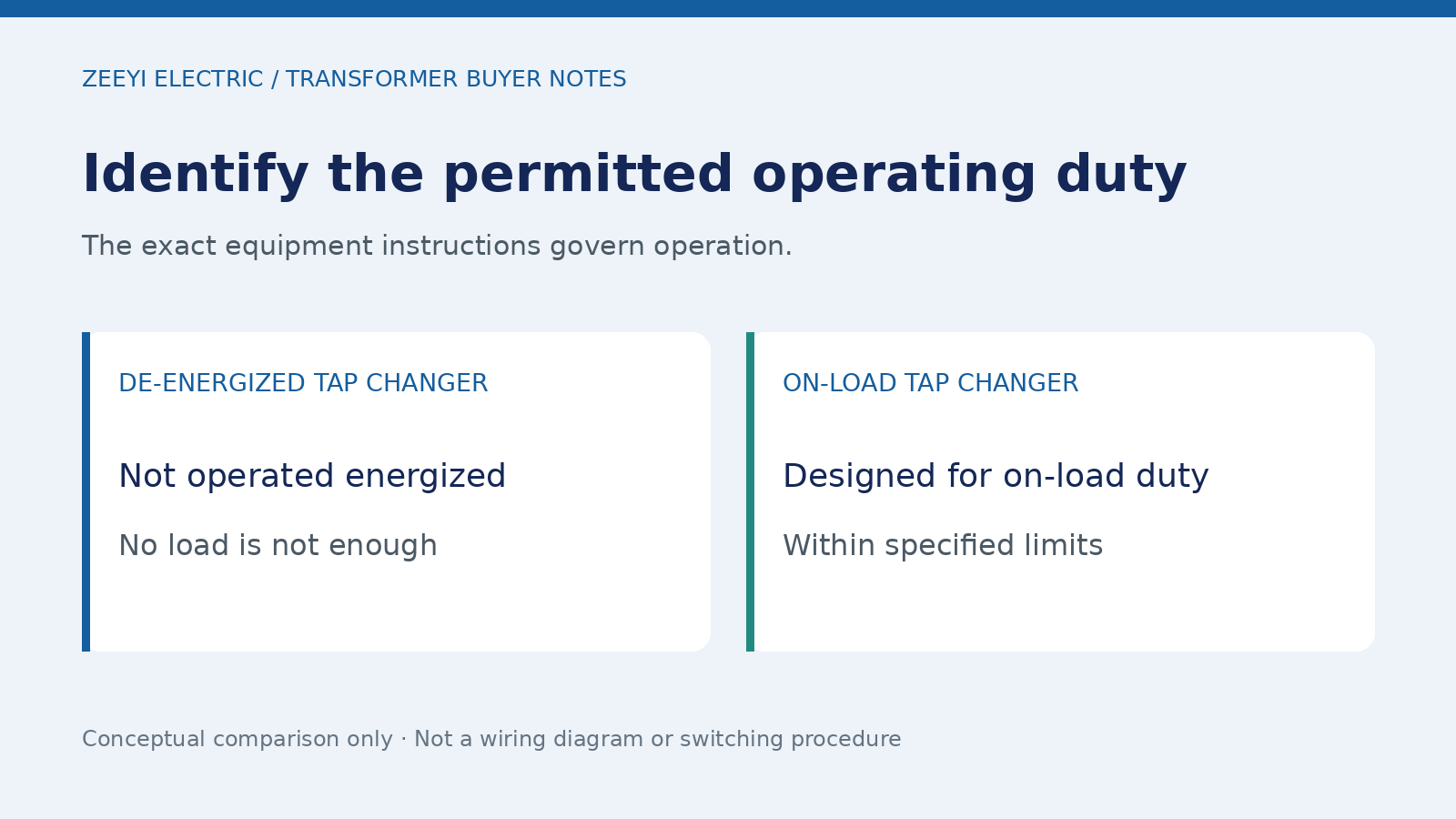
A tap changer changes the effective winding turns ratio to adjust voltage. The operating category matters: a de-energized tap changer (DETC) must not be operated while the transformer is energized. Removing load is not the same as removing voltage. An on-load tap changer (OLTC) is designed for ratio changes while energized and carrying load within its specified limits.
These categories are explained in Megger’s tap-changer technical overview. Neither the word “switch” nor an externally accessible handle establishes permission to operate a device energized. Read the nameplate and the instructions for the exact equipment.
4. Compare the right documents
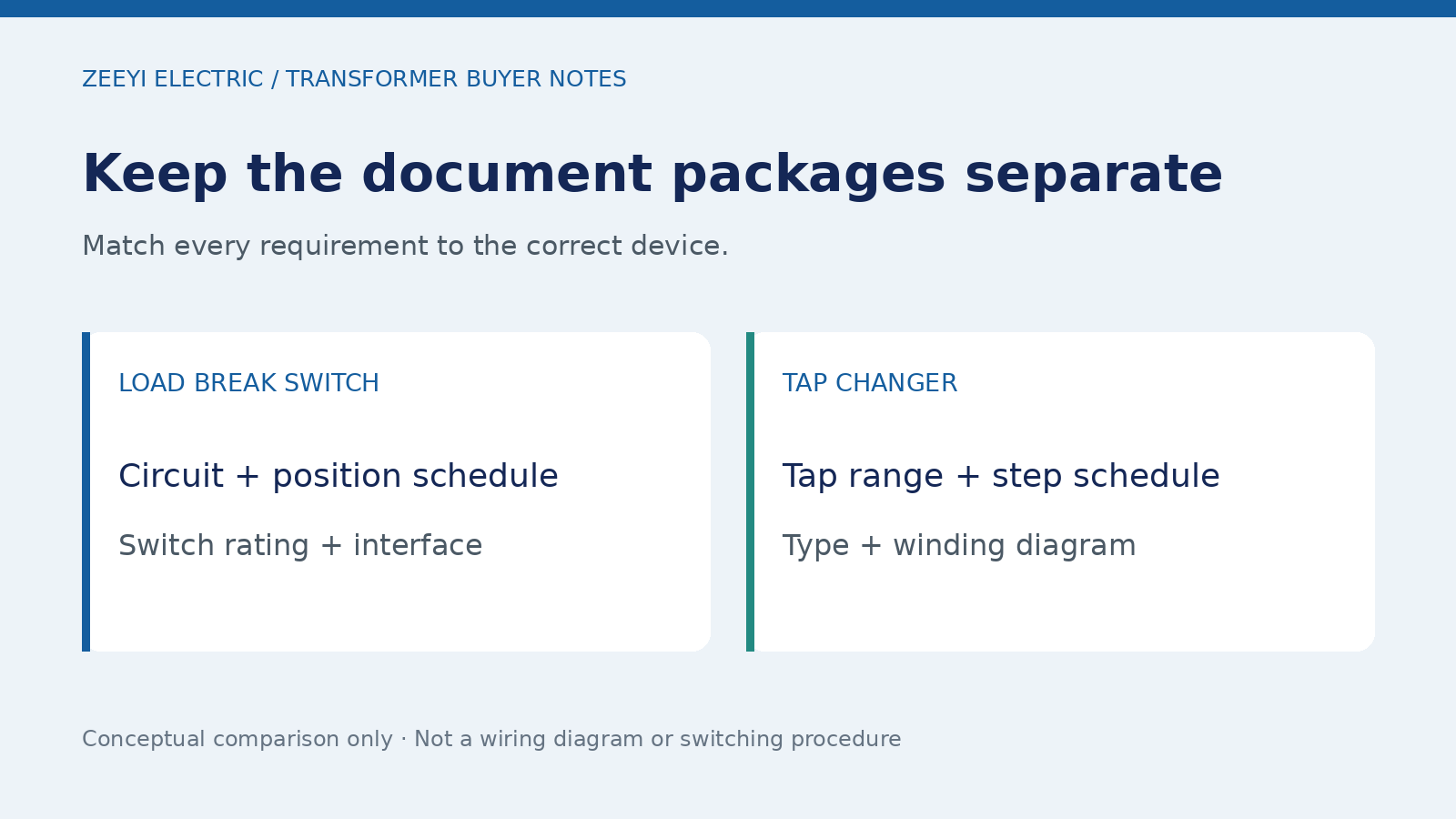
For a load break switch inquiry, attach the circuit drawing and the required connection states. For a tap changer inquiry, attach the winding and tap schedule, including the required tap range, steps and operating category. Keep the documents identifiable by device tag and revision so a supplier can respond to each requirement without guessing.
When comparing offers, use separate rows for each device. Add columns for the project requirement, supplier response, evidence and unresolved question. This simple separation helps prevent a complete-looking quotation from concealing a missing accessory or an unconfirmed duty.
5. Do not approve a substitute from appearance alone
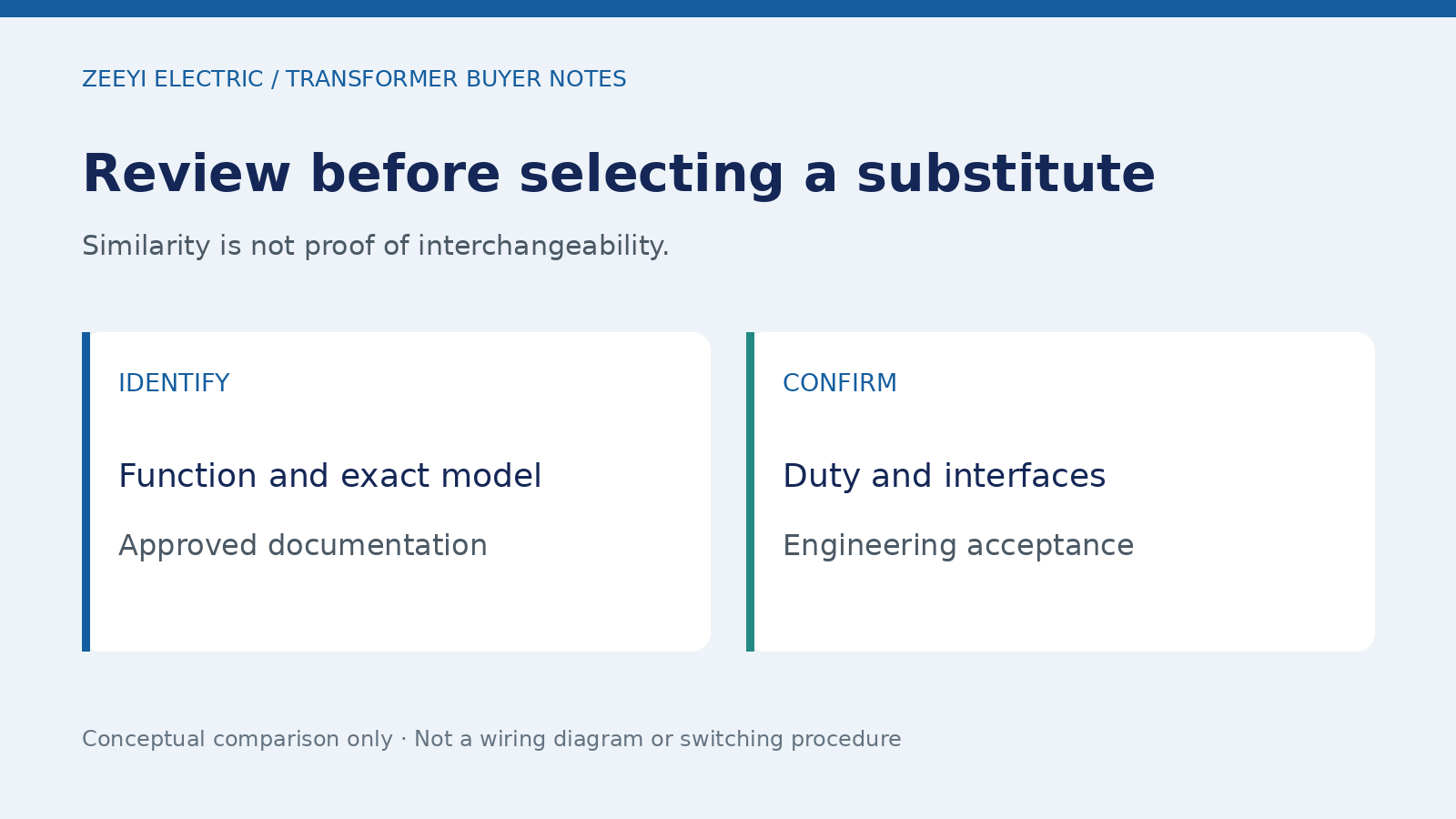
A matching shaft, mounting hole or position count does not demonstrate functional equivalence. Before accepting a proposed alternative, the responsible engineering team should confirm the function, electrical duty, interface, indication and applicable operating documentation.
For a replacement, provide the existing model identification and approved drawings where available. If a document is missing, label the item unresolved rather than borrowing a value from another device. Ask the supplier to identify the exact evidence supporting the proposal.
6. A clearer inquiry starts with one sentence
Write the functional requirement first: “We need a load break switch for the attached transformer circuit,” or “We need a tap-changing arrangement for the attached winding schedule.” Then state the project requirements and the items that still need review.
For an LBOR inquiry, use our transformer loadbreak switch RFQ checklist to organize the supporting package. For multi-position circuit arrangements, the BBM versus MBB guide covers the transition terminology to discuss with your engineering team.
Frequently asked questions
Is a load break switch the same as a tap changer?
No. A load break switch changes a circuit connection; a tap changer changes the transformer winding ratio. Specify each device according to its required function.
Can a de-energized tap changer be operated when there is no load?
No load alone is not sufficient. A de-energized tap changer must not be operated while the transformer is energized. Qualified personnel must follow the exact equipment instructions and approved safety procedures.
Does a matching number of positions prove interchangeability?
No. Position count does not establish function, electrical duty or interface compatibility. Review the exact model documentation and approved drawings before accepting a substitute.
Technical references
- Eaton MN202001EN, August 2015: internal loadbreak switches and tap-changer sections (printed pages 11–12). Reference for the equipment described in that manual, not ZEEYI certification.
- Megger: Tap changers: purpose and DETC/OLTC distinction.
- ZEEYI two-position catalogue and four-position catalogue: confirm the selected model separately.
Original conceptual comparison graphics by ZEEYI ELECTRIC. They are not product, wiring or installation drawings. References checked 27 October 2026.