
Load Break Switch Current Ratings: Continuous, Breaking and Short-Time Withstand
1. Start with three separate questions
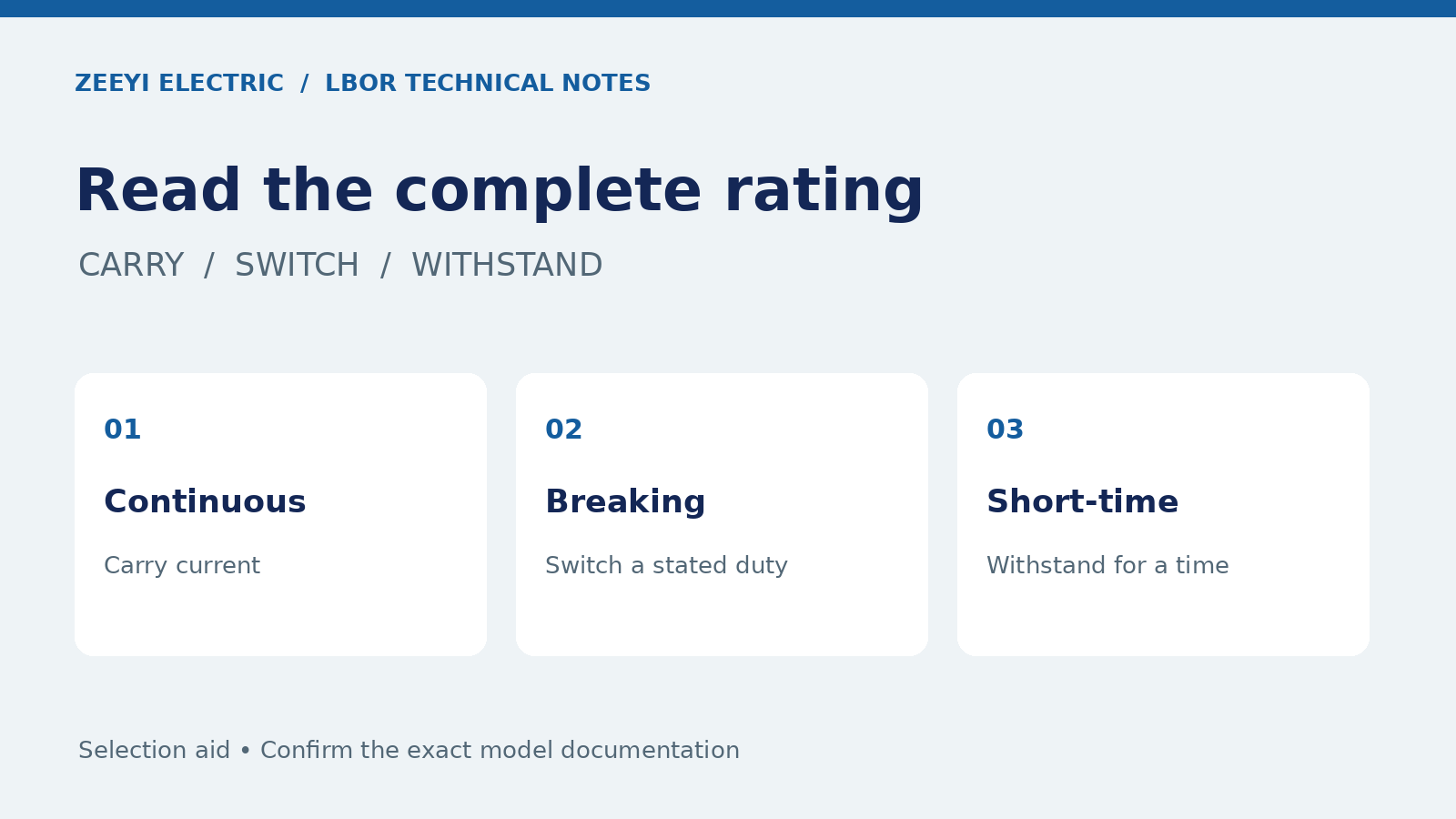
Short answer: continuous current describes carrying duty, breaking current describes a specified switching duty, and short-time withstand current describes a time-limited withstand duty. A single ampere or kiloampere value does not answer all three questions.
For transformer buyers, the practical problem is often an incomplete quotation rather than a complicated calculation. One supplier may show a continuous-current value while another lists a short-time figure prominently. Put the figures into separate fields before comparing offers.
This guide supports specification review. It is not an operating procedure. Medium-voltage equipment requires qualified, authorized personnel, the exact manufacturer's instructions and approved safety procedures.
2. Continuous current: what can be carried?
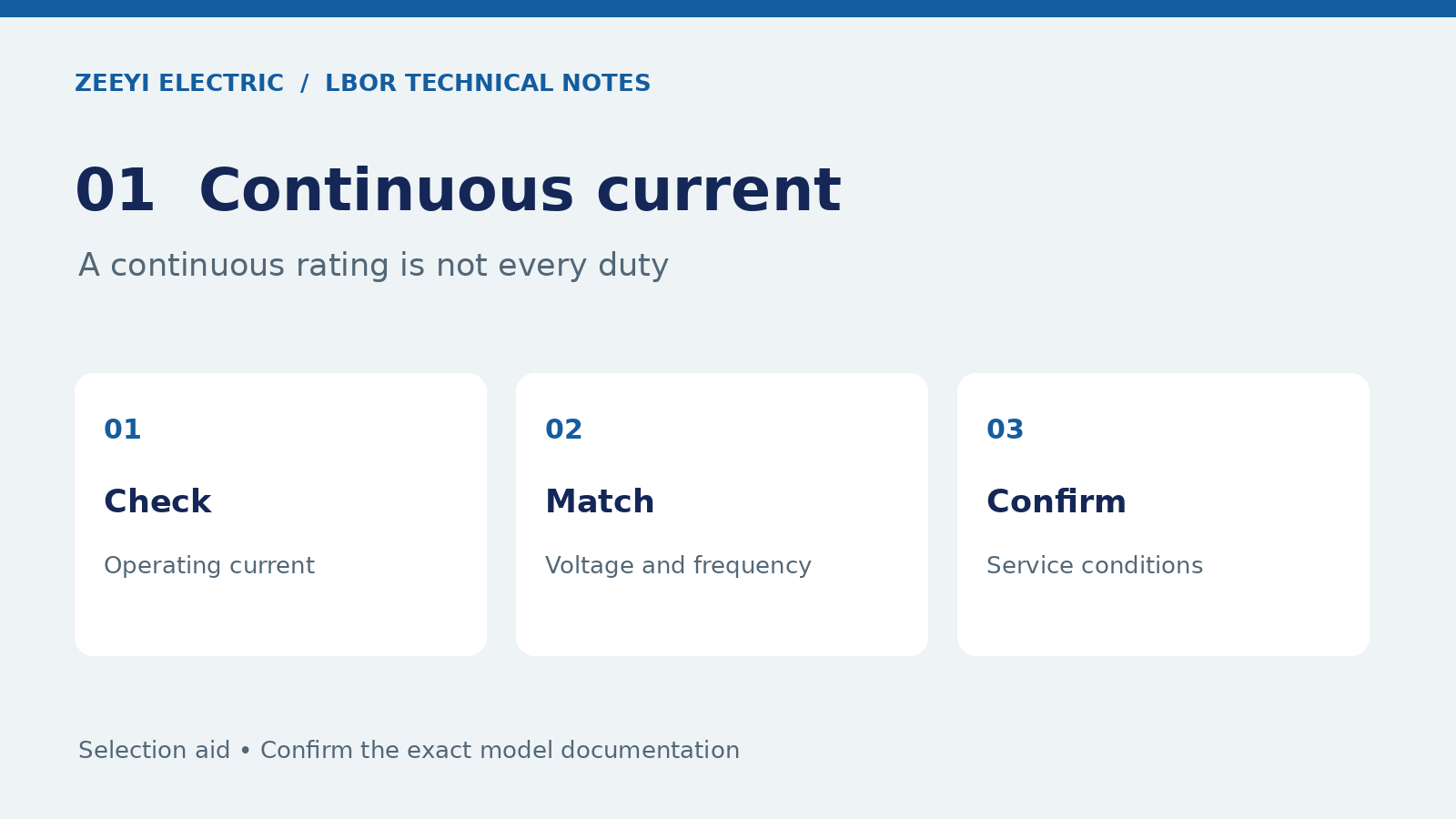
A continuous-current rating addresses sustained current carrying under the stated conditions. It does not, by itself, establish the current a device can break. Eaton's medium-voltage switchgear overview treats continuous-current ratings separately from interrupting and short-circuit ratings.
In your review sheet, keep the project operating requirement beside the proposed model's documented rating. Add the document revision and ask the supplier to identify any relevant service-condition limitations. Avoid transferring a value from a similar-looking model or a different voltage-class column.
For ZEEYI products, use the two-position or four-position family page to locate the relevant catalogue, then request confirmation for the exact proposed model. This guide does not assign a new rating to either family.
3. Breaking current: which switching duty?
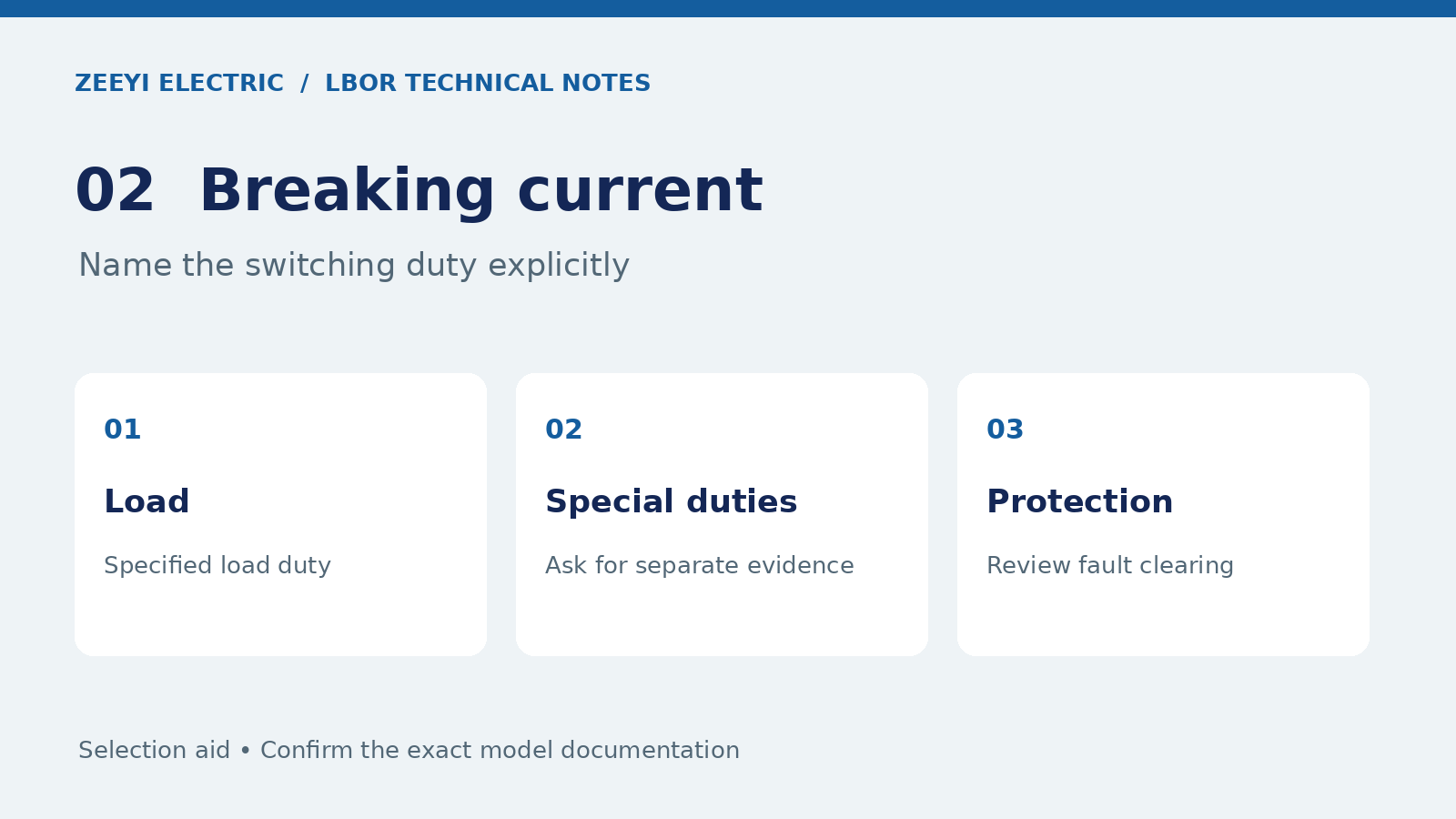
Ask what the switch is required to switch, not merely how many amperes appear on the nameplate. The manufacturer's duty description matters. A load-breaking duty should not be silently treated as a fault-interruption duty.
Eaton's CA800005EN catalogue separates continuous current, load-breaking capability, no-load transformer breaking current, cable-charging breaking current, and short-time withstand entries. This is a useful example of why a review needs separate rows. Its ratings and approvals belong to Eaton equipment, not ZEEYI products.
For an inquiry, attach the circuit description and ask the supplier to identify which documented duty supports the intended application. If the response only says “load break,” leave the evidence column open until the relevant value and conditions are identified.
4. Short-time withstand: how much, for how long?
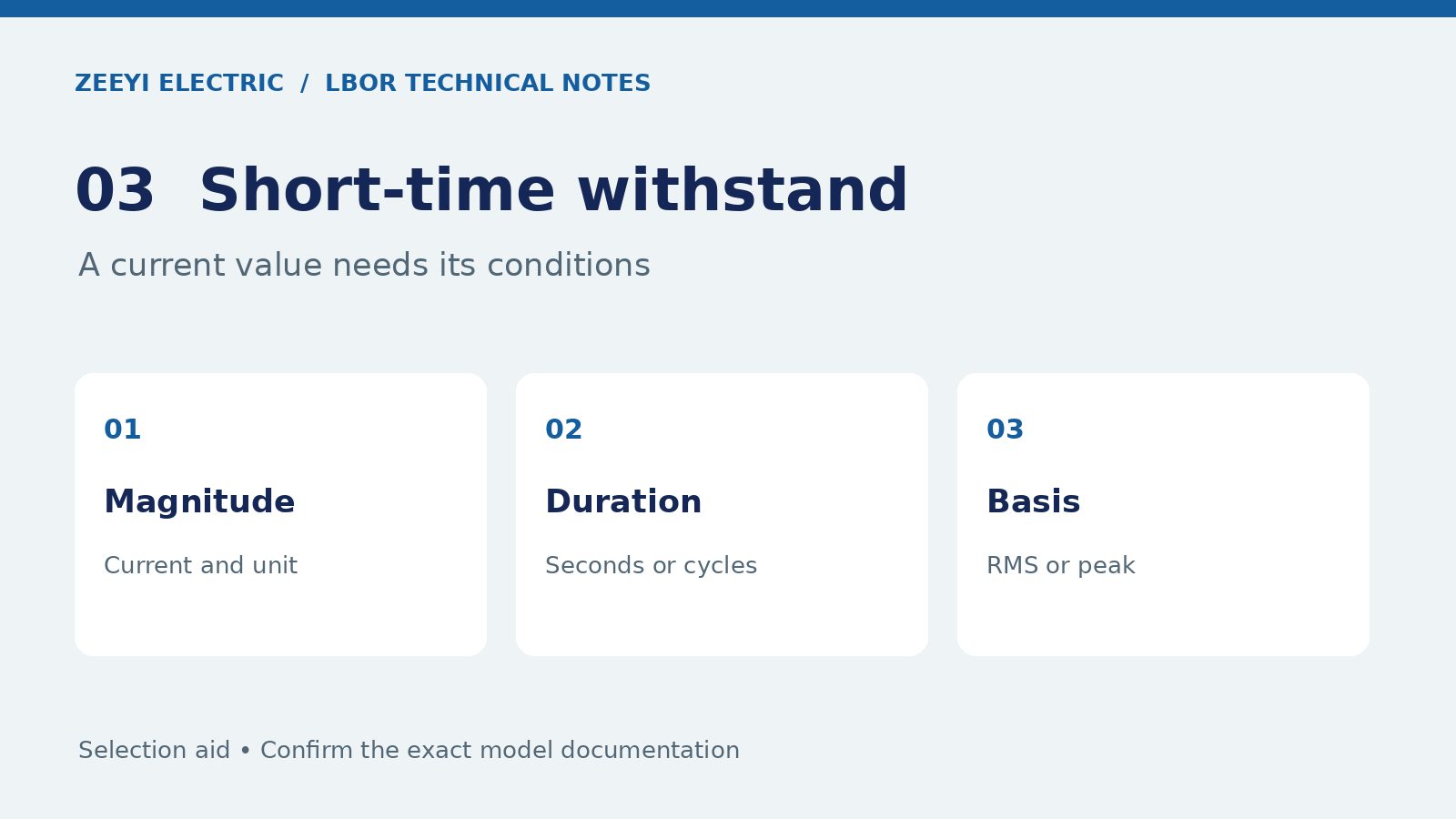
A short-time withstand entry must be read with its duration and current basis. Eaton's catalogue lists timed short-time withstand values and distinguishes symmetrical RMS, asymmetrical RMS and peak entries in its rating tables. These labels are part of the rating, not optional notes.
Withstanding a specified current is not the same claim as interrupting that current. Do not infer fault-clearing capability from a withstand value. Ask the responsible project engineer to review the protective-device arrangement and the required switch duty together.
On a comparison sheet, retain the original unit, duration and wording. If one offer uses seconds and another uses cycles, flag the difference for engineering review with the applicable frequency. Do not invent an equivalence or change the duration to make the columns look consistent.
5. Turn a quotation into a reviewable record
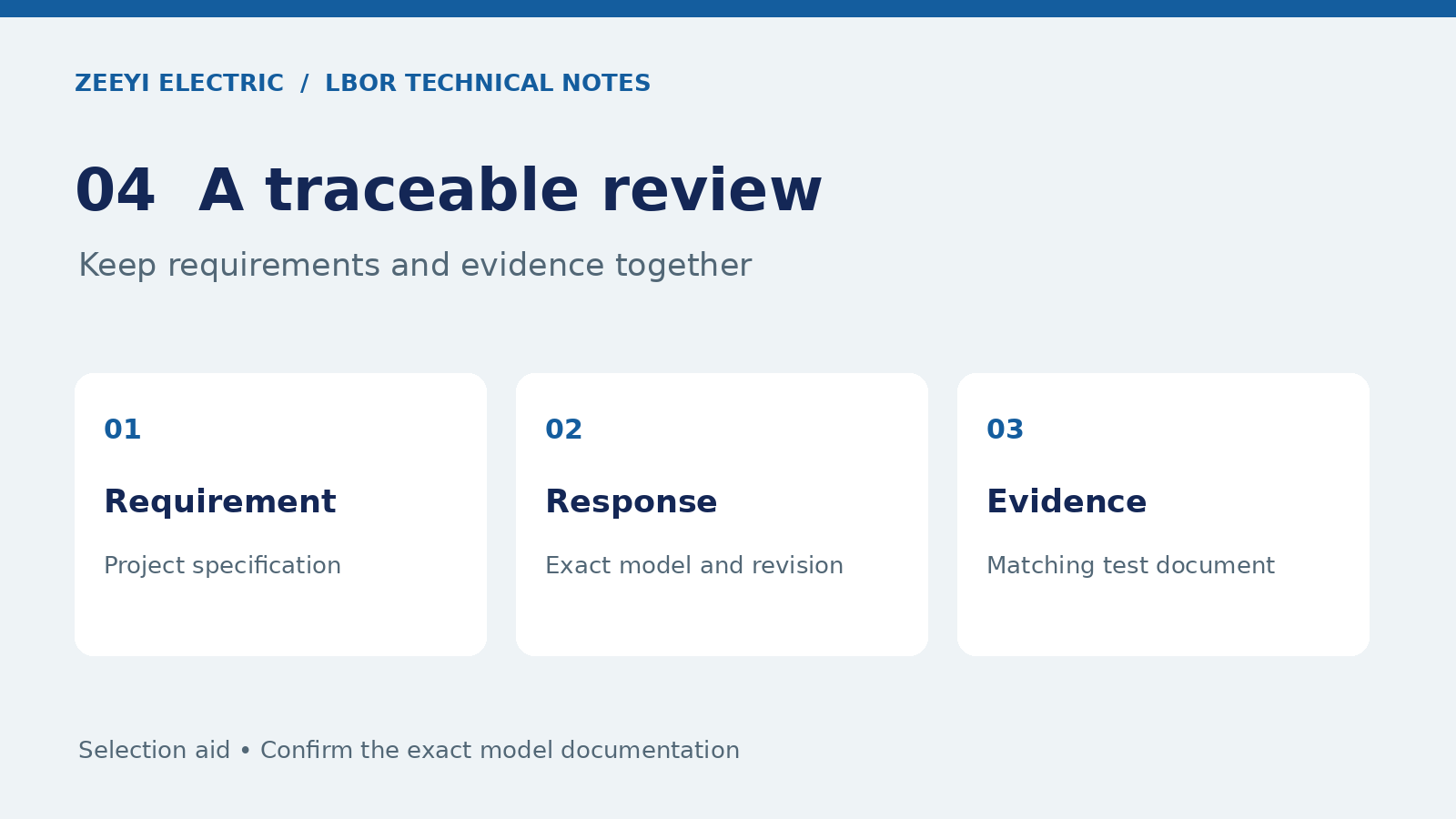
Use a short row-based review rather than a single “compliant” tick box. For each required duty, record:
- Project requirement: the specified value, unit, conditions and source drawing or specification revision.
- Supplier response: the exact model and the applicable catalogue or data-sheet entry.
- Evidence: the relevant test document and its relationship to the offered configuration.
- Decision: accepted, clarification required, or not demonstrated, with the responsible reviewer's name.
For example, if a quotation supplies a continuous-current value but leaves short-time duty unspecified, mark only the latter as unresolved. Ask for the missing evidence rather than copying a number from another manufacturer's brochure. This makes the next technical discussion precise and keeps the purchasing record auditable.
6. What to send with an LBOR inquiry
Start with the circuit arrangement, required duties and approved specification. Add the voltage class, frequency, mounting drawing, terminal arrangement and required switching sequence. Keep mechanical compatibility separate from electrical-duty acceptance: matching mounting dimensions does not close an electrical evidence gap.
Our loadbreak switch RFQ checklist organizes the supporting documents. The BBM versus MBB guide covers transition terminology, while the load break switch versus tap changer article separates switching from ratio adjustment.
Send your requirement sheet to yoyo@zeeyielec.com for a model-specific discussion. Any missing duty, document or condition should remain explicit until it has been resolved.
Frequently asked questions
Does a continuous current rating prove load-breaking capability?
No. Record the continuous current and the specified breaking duty separately. Confirm the exact model, voltage, frequency and relevant test evidence before accepting a proposal.
Does short-time withstand mean a switch can interrupt fault current?
No. Withstanding current for a stated duration and interrupting a fault are different duties. The project engineer must review the switch and the protective device together.
Can a higher current number replace a missing rating?
No. A larger number is not a substitute for the required duty, time basis or test conditions. Mark missing evidence as unresolved and request clarification.
Technical references
- Eaton CA800005EN, March 2025, rating tables: an external example of separately stated duties, not a ZEEYI qualification.
- Eaton: Fundamentals of medium-voltage switchgear: background on continuous and interrupting ratings.
- ZEEYI two-position catalogue and four-position catalogue: model-specific source documents for your inquiry.
Original explanatory graphics by ZEEYI ELECTRIC. These are selection aids, not wiring diagrams or test curves. References checked 28 October 2026.